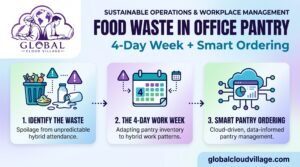
The Friday afternoon office pantry check reveals a frustrating, familiar sight. Half-empty boxes of expensive artisanal donuts, wilting fresh fruit platters, moldy sandwich trays, and gallons of spoiled milk sit waiting to be tossed into the industrial bins. For many growing SMEs, catering and office snack budgets are quietly bleeding money into organic waste dumpsters every single week.
For years, standard business advice told you to manage pantry waste by sending reminder emails asking employees to eat what they take or simply reducing catering budgets arbitrarily. But polite notes and guesswork portioning cannot fix a fundamentally broken, rigid office schedule. If your team is stuck in a traditional five-day routine while hybrid attendance fluctuates wildly, you are actively over-ordering food for people who aren’t even in the building.
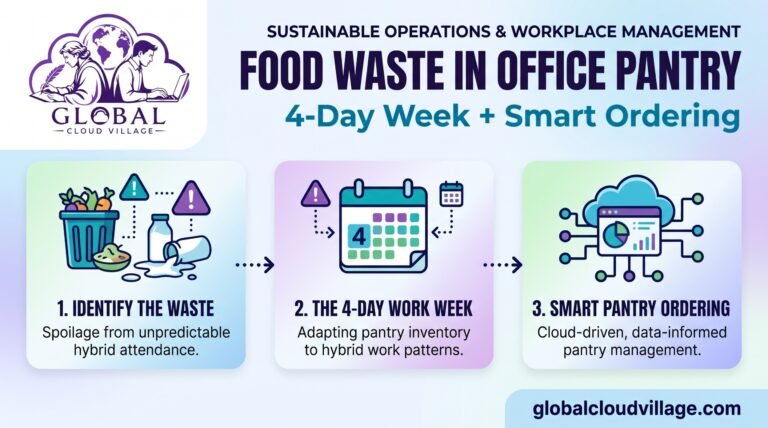
To eliminate organic waste and protect your operating overhead, you need a modern operational paradigm: merging a structured 4-day work week with cloud-driven, data-informed smart pantry ordering.
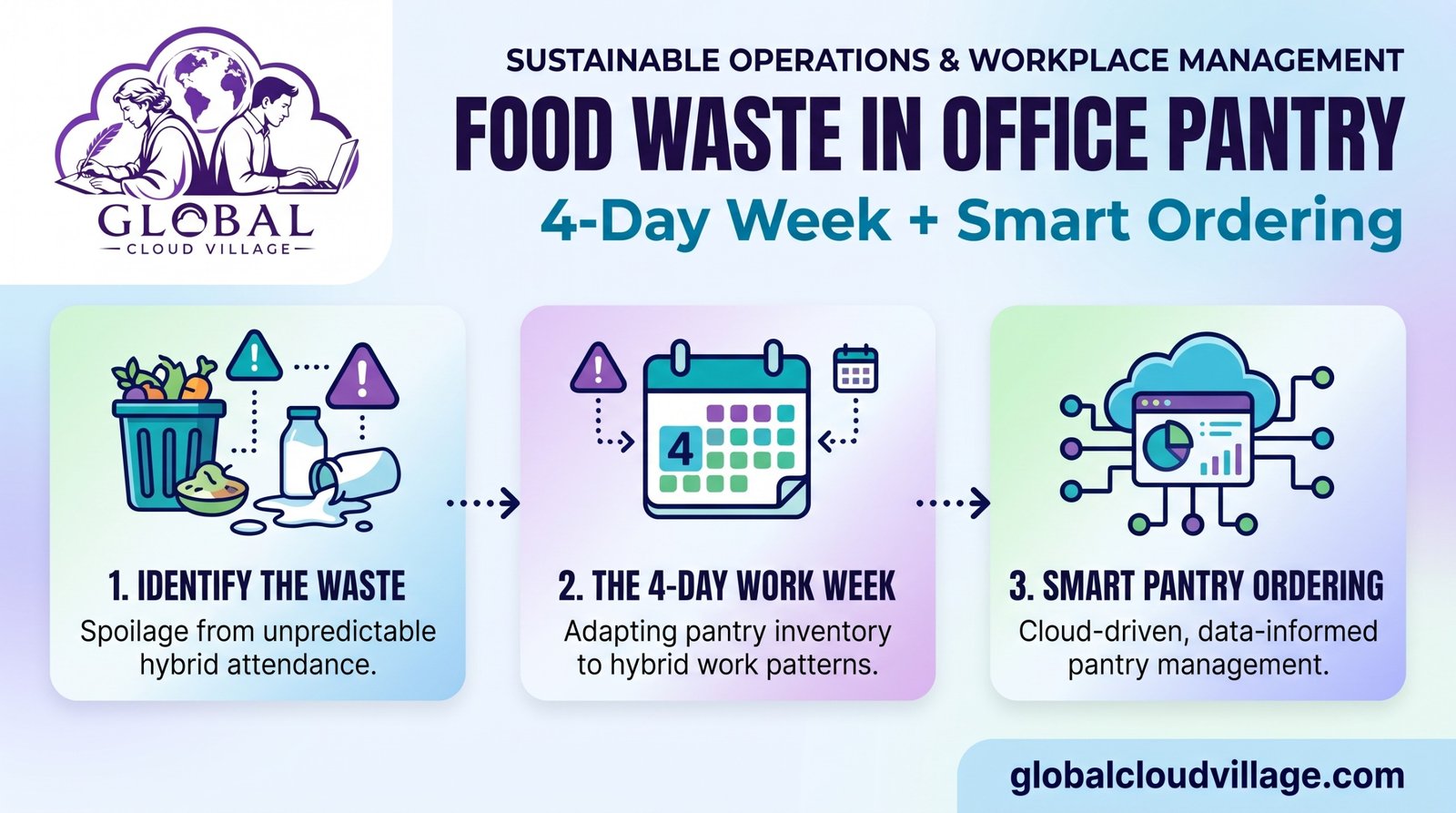
The Hidden Sinks of Workplace Food Waste
Before you can slash your pantry expenses and shrink your organic waste footprint, you must identify where your office actually breeds food spoilage. In a standard traditional SME workspace, pantry waste is driven by three major culprits:
- The Friday Attendance Drop-Off: Traditional offices experience a natural dip in physical attendance on Fridays as remote work or early weekend transitions kick in, yet bulk catering contracts deliver the exact same food volume meant for a full Monday roster.
- The Bulk Perishable Trap: Buying massive wholesale quantities of fresh dairy, produce, and bakery items to secure volume discounts guarantees that half the stock spoils before consumption cycles catch up.
- The Disconnected Procurement Guesswork: Office managers rely on rough mental estimates rather than actual consumption metrics to order weekly supplies, leading to chronic over-purchasing and overflowing trash cans.
Plaintext
[Rigid 5-Day Attendance Schedule] ──► [Static Bulk Food Deliveries] ──► [Unoccupied Friday Spoilage] ──► Wasted Operating Cash
│
└──► [Lack of Consumption Data] ──► [Overflowing Organic Bins]
Phase 1: The 4-Day Work Week as a Natural Waste Barrier
The single fastest way to cut your office food waste by 20% overnight is to eliminate an entire day of office occupancy.
Running a physical workspace five days a week requires continuous catering, beverage stocking, and snack replenishment regardless of actual team presence. When you transition your organization to a compressed 4-day work week (such as operating Monday through Thursday and closing the physical office entirely on Friday), you instantly align food inventory cycles with active human presence.
- Zero Unoccupied Spoilage Days: By closing the office on Fridays, you remove the primary window where fresh food, dairy, and opened pantry items sit unconsumed over long weekends, drastically reducing weekly spoilage.
- Aligned Catering Demands: Catering services and snack deliveries are restricted to four high-focus operational days, allowing office managers to right-size food orders to actual peak headcount.
- Heightened Operational Velocity: Teams operating under a compressed schedule focus intensely on collaborative execution during work days, maximizing pantry utilization efficiency without idle waste.
Phase 2: Cloud-Optimized Smart Ordering and Inventory Tracking
While the 4-day schedule removes the Friday spoilage window, introducing smart cloud-based inventory tracking attacks mid-week waste.
By integrating automated pantry inventory apps or cloud procurement platforms linked to real-time office attendance tracking, you achieve an immediate drop in surplus food purchasing:
- Attendance-Linked Procurement: Cloud workplace tools track desk bookings and badge swipes, automatically adjusting weekly snack and coffee orders based on exact expected headcounts.
- Dynamic Just-In-Time Stocking: Replacing massive bulk wholesale deliveries with automated, frequent micro-deliveries ensures that perishables arrive fresh and are consumed before expiration dates approach.
- Heightened Inventory Visibility: Office managers track consumption velocity via digital dashboards, eliminating guesswork and ensuring zero over-purchasing of unpopular food items.
Step-by-Step Blueprint to Cut Office Food Waste
Transitioning your business to a lean, low-waste pantry model does not require a disruptive overhaul. Follow this structured four-step implementation guide:
- Audit Current Pantry Waste: Review your waste logs and trash disposal contents for two weeks. Categorize spoiled items by type, volume, and cost to identify your worst-performing pantry purchases.
- Pilot the 4-Day Office Schedule: Close the physical office facility entirely on Fridays, testing a compressed 4-day operational model that naturally cuts weekly perishable exposure by 20%.
- Deploy Cloud-Based Inventory Tracking: Implement a lightweight cloud tool or spreadsheet-linked app to track pantry consumption rates and match orders directly to active team attendance.
- Transition to Micro-Delivery Procurement: Switch from rigid, large-scale monthly wholesale contracts to flexible, data-driven local grocery deliveries that scale up or down based on actual weekly headcount.
The Food Waste & Cost Comparison Matrix
| Operational Factor | Traditional 5-Day Bulk Setup | Modern 4-Day + Smart Ordering Model | The Efficiency Gain |
| Pantry Exposure | Fresh food sitting in an unpopulated office every Friday. | Physical office closed 3 days a week; zero wasted weekend exposure. | ~25% reduction in perishable spoilage windows. |
| Ordering Strategy | Guesswork bulk purchasing leading to chronic overstock. | Data-driven cloud ordering tied directly to active headcount. | Significant drop in discarded surplus food. |
| Organic Waste Volume | Overflowing organic waste bins filled with spoiled produce and dairy. | Lean, optimized pantry inventory consumed entirely before expiration. | Substantial decrease in corporate organic waste footprint. |
| Financial Impact | Hundreds of dollars in wasted catering and snack budgets monthly. | Predictable, optimized pantry spending aligned with real demand. | Cumulative 30%+ reduction in total office food overhead. |
Conclusion: Modernize Pantry Management, Protect Your Bottom Line
Office food waste is no longer just an unfortunate cost of maintaining company culture; it is a direct symptom of rigid scheduling and unmanaged procurement habits.
By letting go of wasteful 5-day bulk ordering and embracing a compressed 4-day work week combined with smart cloud inventory tracking, you protect your company from unnecessary expenses while building a leaner, more sustainable enterprise.
Take control of your operating overhead, reduce your environmental footprint, and position your SME for long-term operational resilience.
Frequently Asked Questions About Office Food Waste Reduction
Will closing the office on Fridays and tightening pantry orders negatively affect employee morale?
Not at all. Employees overwhelmingly value the flexibility and work-life balance of a 4-day work week. Furthermore, smart ordering focuses on providing high-quality, preferred snacks and fresh coffee during active work days rather than wasting money on stale bulk items that get thrown away.
How does cloud inventory tracking help manage pantry supplies?
Cloud tools track consumption patterns and integrate with office attendance data, allowing office managers to order exact quantities of perishables. This prevents over-buying and ensures shelves remain stocked with fresh items without excess waste.
Is transitioning to smart pantry procurement difficult to set up?
Not at all. Many office management platforms and local delivery services offer simple digital subscription controls that allow you to adjust weekly order volumes with a single click based on your team’s schedule.
Scale Your Operations With Absolute Clarity
Escaping high operational overhead and legacy inefficiencies is the vital first step toward maximizing your enterprise profitability. Discover the complete blueprint for running a highly productive, streamlined business without technical roadblocks.
Get your copy of Global Cloud Village and Sustainable Workplace Strategies on Amazon:
About the Author: Global Cloud Village
Global Cloud Village translates complex digital tech systems into clear, human-centric strategies for growing SMEs, founders, and industry leaders. We help businesses replace clunky, fragmented legacy habits with automated, high-adoption cloud architectures that protect data and build operational scale. Explore our optimization insights at globalcloudvillage.com.
Tags: Office Food Waste Reduction, 4 Day Work Week, Smart Pantry Ordering, Sustainable Workplace, Workplace Efficiency, Green Office