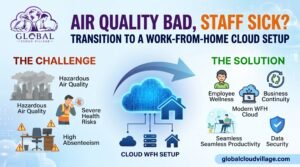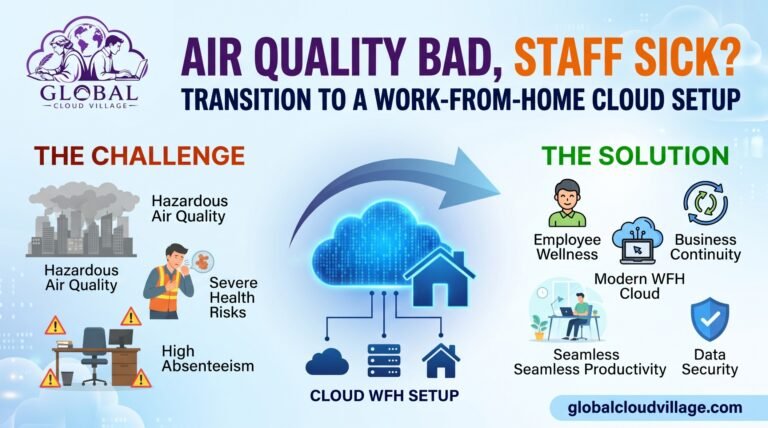
The local environmental monitoring report flashes hazardous air quality warnings, smog blankets the city, and your employees wake up facing severe health risks from commuting or working inside unconditioned physical offices. For many growing SMEs, environmental pollution and poor air quality events have quietly emerged as critical threats that lead to sudden staff absenteeism, respiratory illness, and sharp drops in workplace productivity.
For years, standard business advice told you to manage hazardous air days by telling employees to tough it out or hoping office HVAC air filters would suffice. But passive facility management cannot fix a fundamentally rigid office-bound model when regional health hazards make physical commuting dangerous. If your team is locked into office desks with zero remote capability, environmental health crises will continue to paralyze your daily operations.
To protect your workforce’s health and maintain seamless productivity during air quality emergencies, you need a modern operational paradigm: deploying an agile, secure Work From Home (WFH) cloud infrastructure.
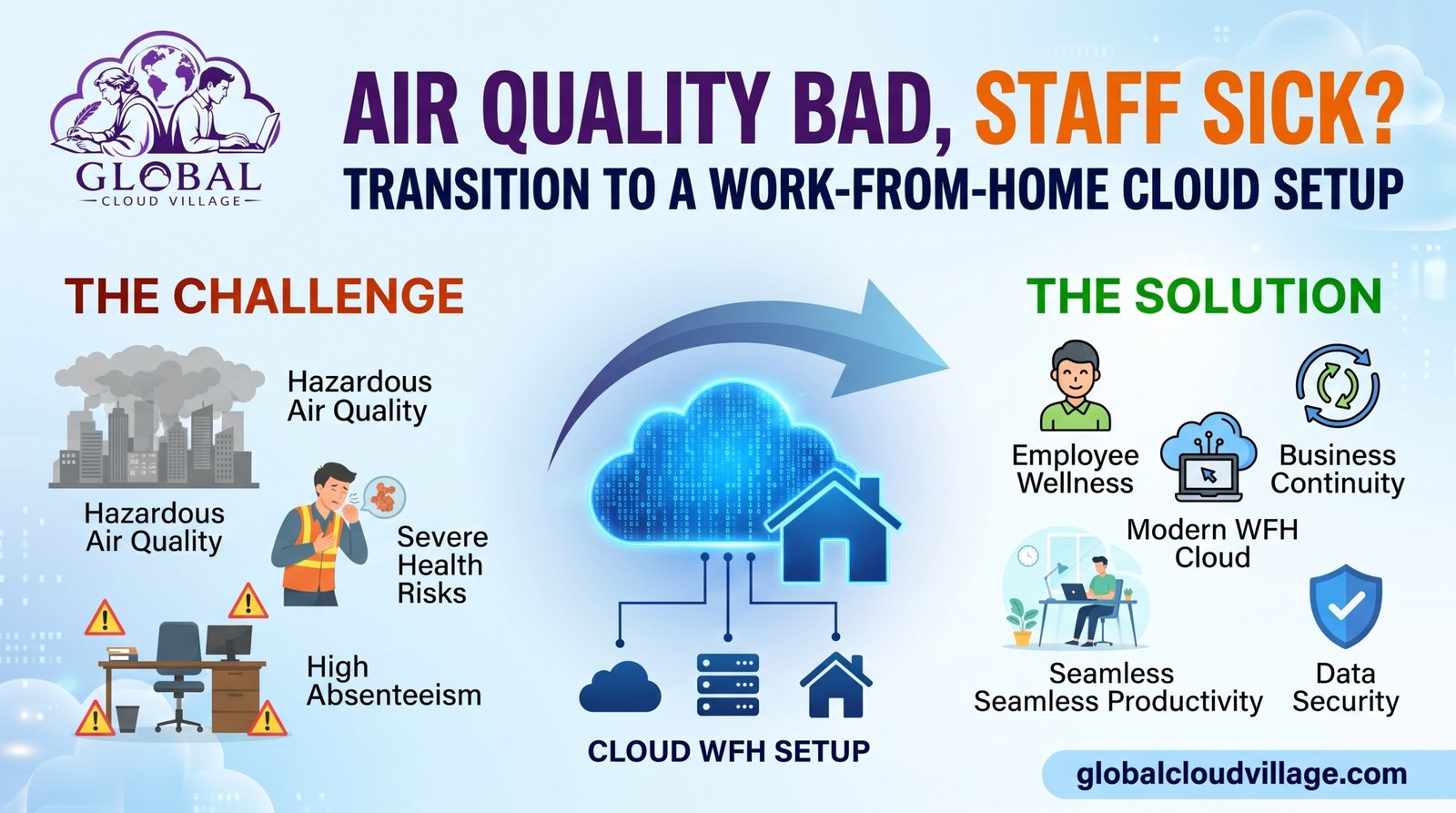
The Hidden Sinks of Office Air Vulnerability
Before environmental hazards force your team indoors, you must identify where your physical workspace creates operational risk. In a standard traditional SME workspace, vulnerability is driven by three major culprits:
- The Commute-Induced Health Hazard: Forcing employees to travel through heavy smog and polluted urban corridors to reach a physical desk directly compromises their health and increases sick leave rates.
- The Inadequate Office Filtration Trap: Standard commercial office buildings often lack medical-grade air purification, trapping fine particulate matter (PM2.5) indoors and sickening staff over long exposure hours.
- The Zero-Flexibility Operational Model: Operating without a cloud-enabled remote setup means that closing the office to protect employee health brings enterprise revenue generation to an absolute standstill.
Plaintext
[Hazardous Air Quality / Smog] ──► [Mandatory Office Commute] ──► [Staff Illness & Absenteeism] ──► Complete Productivity Stagnation
│
└──► [Rigid Office Infrastructure] ──► [Zero Remote Operational Capacity]
Phase 1: Cloud-Native Infrastructure as a Health Shield
The single fastest way to protect employee health during environmental crises is to decouple your workflows from physical office geography through cloud migration.
Running core business operations on local office hardware forces you to maintain physical attendance regardless of external health risks. When you migrate your documents, communication channels, and enterprise software to secure cloud platforms (such as Microsoft 365, Google Workspace, AWS, and cloud ERP suites), your business operations move securely into virtual environments.
- Location-Independent Health and Safety: Modern cloud architectures allow employees to log in from the safety of filtered home environments, eliminating hazardous commutes during smog and pollution spikes.
- Elimination of Office Bottlenecks: By storing all company files and databases in secure cloud repositories, your team accesses everything required for daily execution without stepping foot in a polluted building.
Phase 2: Agile WFH Protocols and Seamless Collaboration
While cloud migration secures your data, establishing a structured Work From Home operational protocol ensures your team transitions effortlessly when air quality warnings peak.
By empowering your staff to pivot to remote execution instantly, you achieve an immediate transition from health vulnerability to high-performance operational continuity:
- Instantaneous Emergency Pivots: When hazardous air alerts trigger, management activates pre-configured WFH protocols, allowing staff to transition home within minutes with zero downtime.
- Protected Workforce Wellness: Prioritizing air safety and remote flexibility reduces chronic respiratory fatigue, lowers sick leave absenteeism, and drives higher long-term staff retention.
- Heightened Operational Velocity: Cloud-based task trackers and communication hubs keep projects moving forward transparently, ensuring team alignment and customer satisfaction remain unbroken.
Step-by-Step Blueprint to Build a WFH Cloud Setup
Transitioning your business to a health-resilient, remote-ready model does not require a disruptive overhaul. Follow this structured four-step implementation guide:
- Audit Current Remote Readiness: Evaluate your team’s hardware, software access points, and security protocols to identify gaps in remote execution capabilities.
- Migrate Workflows to Cloud Platforms: Move all document storage, communication tools, and enterprise resource planning software to secure, cloud-native SaaS environments.
- Equip Staff with Portable, Secure Devices: Transition team members away from stationary office towers toward secure laptops or devices equipped with encrypted VPN and cloud access.
- Formalize an Environmental Health WFH Policy: Establish clear company guidelines that trigger instant remote work protocols whenever local air quality indices cross hazardous health thresholds.
The Health & Productivity Comparison Matrix
| Operational Factor | Traditional Office-Bound Setup | Modern WFH Cloud Setup Model | The Efficiency Gain |
| Air Quality Crisis Impact | Staff exposed to hazardous commute pollution and indoor office smog. | Safe remote execution from filtered home environments. | 100% protection of employee health and wellness. |
| Absenteeism Rates | High sick leave spikes due to respiratory illness and pollution exposure. | Dramatically lower absenteeism and sustained employee vitality. | Significant reduction in lost work hours. |
| Operational Continuity | Business operations halt if office attendance becomes unsafe. | Seamless transition to cloud workflows with zero downtime. | Absolute preservation of daily revenue and output. |
| Financial Impact | Soaring health insurance claims and lost payroll productivity. | Optimized operational overhead with resilient cloud scalability. | Cumulative 25%+ improvement in organizational agility. |
Conclusion: Prioritize Workforce Health, Protect Your Enterprise Momentum
Poor air quality and environmental health crises are no longer just temporary seasonal inconveniences; they are direct threats to workforce vitality colliding with rigid office-bound business models.
By letting go of mandatory physical presence and embracing an agile Work From Home cloud setup, you protect your team’s health while building a resilient, modern enterprise.
Take control of your operating continuity, safeguard your employees, and position your SME for long-term success.
Frequently Asked Questions About WFH Cloud Setups
Will moving to a cloud-based WFH setup compromise our team’s daily collaboration?
Not at all. When paired with modern cloud communication tools like video conferencing, instant messaging, and shared digital workspaces, remote teams often collaborate with greater focus and minimal office distractions.
How do we ensure data security when employees work from home during air quality emergencies?
Modern cloud providers utilize enterprise-grade encryption, multi-factor authentication (MFA), and secure role-based access controls, ensuring company data remains safely locked within the cloud rather than vulnerable home hard drives.
Is setting up a WFH cloud infrastructure expensive for small businesses?
Cloud software operates on flexible subscription pricing, making it highly accessible. Preventing even a few days of sickness-induced downtime and lost productivity covers the cost of cloud tools many times over.
Scale Your Operations With Absolute Clarity
Escaping high operational vulnerability and legacy presenteeism habits is the vital first step toward maximizing your enterprise profitability. Discover the complete blueprint for running a highly productive, streamlined business without technical roadblocks.
Get your copy of Global Cloud Village and Remote Workplace Strategies on Amazon:
About the Author: Global Cloud Village
Global Cloud Village translates complex digital tech systems into clear, human-centric strategies for growing SMEs, founders, and industry leaders. We help businesses replace clunky, fragmented legacy habits with automated, high-adoption cloud architectures that protect data and build operational scale. Explore our optimization insights at globalcloudvillage.com.
Tags: Work From Home Setup, Cloud Computing, Air Quality Health, Business Continuity, Remote Work Infrastructure, Employee Wellness