For decades, small-to-medium enterprise (SME) founders operated under a simple assumption: environmental, social, and governance (ESG) reporting was strictly a concern for publicly traded giants and Wall Street conglomerates.
That boundary has completely collapsed. Whether you are seeking expansion capital from venture funds, applying for commercial bank financing, or attempting to secure tier-one vendor contracts with multinational corporations, you will eventually face a standardized questionnaire asking for your verified ESG data and carbon metrics.
If your response involves digging through messy paper invoices, guessing monthly electricity usage, or scrambling to build a retroactive spreadsheet, you risk losing valuable funding and enterprise contracts.
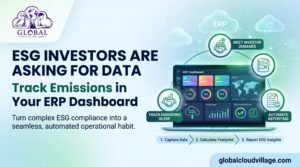
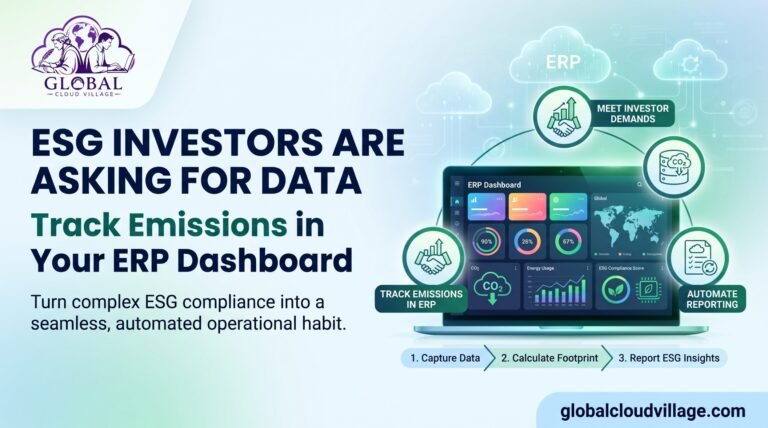
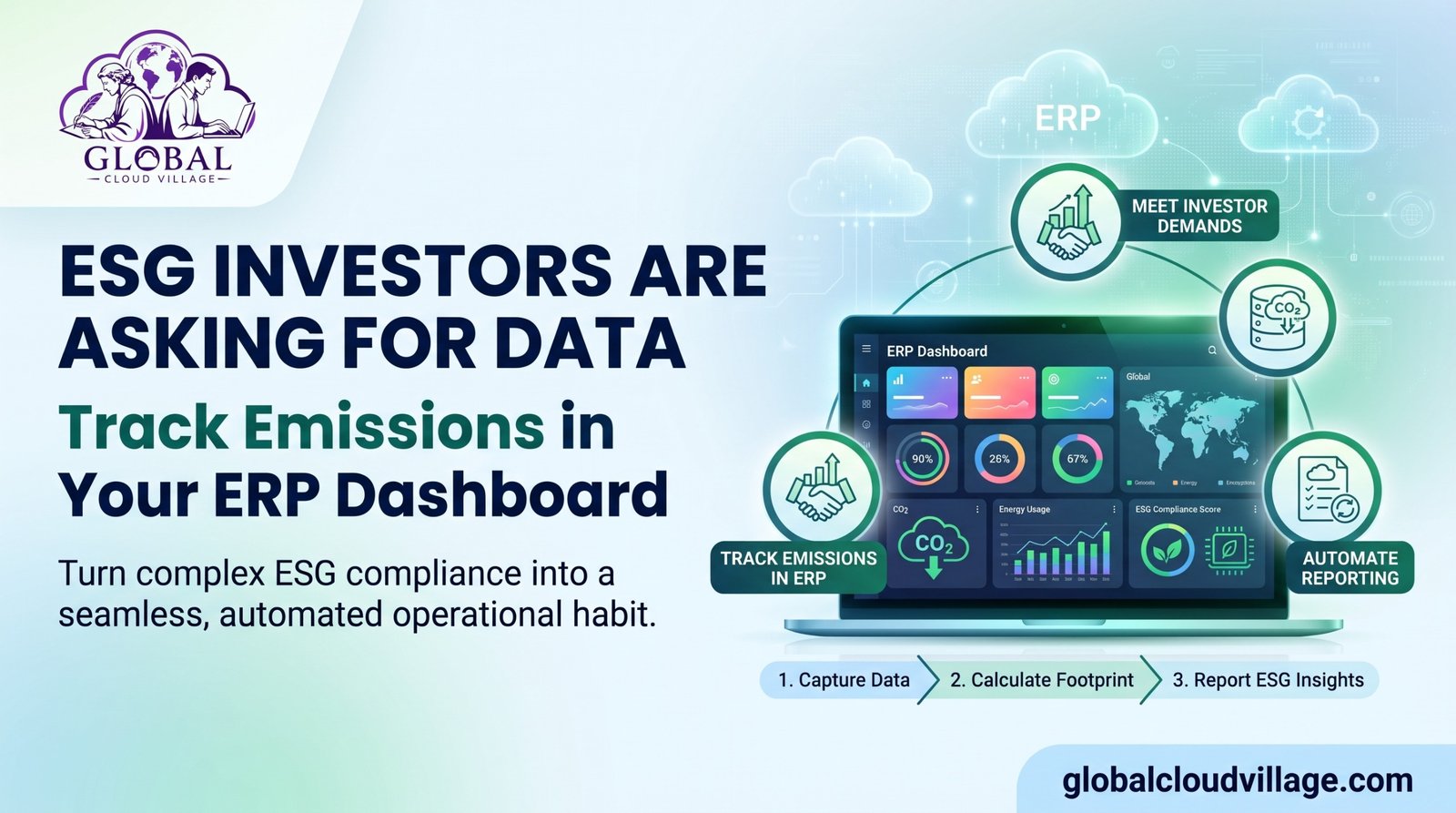
Meeting modern investor expectations does not require an army of expensive environmental consultants. By integrating sustainability tracking metrics directly into your cloud Enterprise Resource Planning (ERP) dashboard, you can turn ESG compliance into a seamless, automated operational habit.
Why ESG Data Matters to Modern Investors
Investors and enterprise procurement teams view sustainability data as a direct reflection of overall operational health and risk management. If a company lacks visibility into its energy consumption and resource waste, it usually suffers from broader operational inefficiencies.
Failing to provide structured ESG metrics introduces three major commercial roadblocks:
- Capital Friction: Venture capital and commercial lenders face strict regulatory mandates to green their portfolios. If you cannot prove your sustainability metrics, accessing low-interest capital becomes significantly harder.
- Vendor Disqualification: Major global enterprises are legally obligated to audit their entire supply chain’s carbon impact. Vendors unable to provide transparent emissions reports are systematically filtered out of procurement bids.
- Administrative Burnout: Trying to compile retrospective environmental reports manually drains administrative hours that should be spent driving core business growth.
[Investor ESG Inquiry] ──► [Lack of Centralized Data] ──► [Delayed Dilution & Lost Contracts] ──► Stagnant Enterprise Growth │ └──► [Manual Spreadsheet Guesswork] ──► [Audit Failure & Compliance Risk]
The Solution: Embed ESG Tracking Inside Your Cloud ERP
The most efficient way to satisfy investor demands without bloating your administrative overhead is to centralize your ESG metrics within the digital brain your business already uses: your cloud ERP platform (such as Odoo or Zoho).
- Automated Expense-to-Emission Mapping: Configure your accounting module to log utility bills, fuel purchases, and material procurement not just by financial cost, but by consumption units (kWh, liters, kilograms). Your ERP automatically converts these entries into verified carbon equivalents.
- Real-Time Visual Dashboards: Build a custom executive dashboard inside your cloud ERP that displays your real-time Scope 1, 2, and 3 emissions metrics alongside your standard financial KPIs. When an investor requests an ESG update, you can export a clean, fully auditable report in seconds.
- Supply Chain Transparency: Use your ERP’s inventory and procurement tracking tools to monitor supplier sustainability compliance, ensuring your entire upstream network meets modern environmental thresholds.
Step-by-Step Blueprint for ERP ESG Integration
- Identify Key Investor Metrics: Determine which specific ESG indicators your lenders or enterprise clients care about most (e.g., carbon per unit produced, total energy reduction, or waste diversion rates).
- Configure ERP Tracking Tags: Set up custom tracking fields and expense tags within your cloud ERP accounting and inventory modules to capture resource consumption data automatically.
- Establish Baseline Reports: Run an initial quarterly report to verify your data accuracy against historical utility bills and operational logs.
- Publish Transparent Updates: Use your clean, ERP-generated ESG reports to brief investors, strengthen banking relationships, and win competitive enterprise contracts.
The ESG Reporting Comparison Matrix
| Reporting Approach | Manual Spreadsheet Tracking | Dedicated Standalone ESG Software | Integrated Cloud ERP Dashboard |
| Data Accuracy | Low; prone to human calculation errors and missing receipts. | High; specialized environmental calculation tools. | High; tied directly to verified financial ledgers and transactions. |
| Administrative Cost | High labor hours spent compiling retrospective data. | Additional software subscription fees on top of core business apps. | Zero extra software cost; utilizes existing cloud ERP workflows. |
| Investor Readiness | Poor; difficult to audit or verify quickly. | Moderate; requires exporting data between disparate systems. | Excellent; instant, auditable reports generated directly from core business data. |
Conclusion: Turn Compliance Into Investor Confidence
Environmental, social, and governance reporting is no longer a niche corporate formality—it is a core benchmark of modern business resilience. SMEs that cling to manual spreadsheets will continue to face friction, lost contracts, and capital delays.
By embedding automated carbon and resource tracking directly into your cloud ERP dashboard, you transform ESG compliance from an administrative headache into a powerful trust-building asset for investors and enterprise partners.
Frequently Asked Questions About ERP ESG Tracking
Do small businesses really need to worry about ESG reporting? Yes. While direct compliance laws often target massive corporations first, supply chain pressures and investor requirements mean SMEs are increasingly asked for emissions data to secure loans, grants, and B2B contracts.
How difficult is it to set up ESG dashboards in an ERP like Odoo or Zoho? It is surprisingly simple. Modern cloud ERPs feature modular architectures that allow you to create custom tracking fields and automated reporting views within your existing accounting and inventory modules without disrupting operations.
Can tracking ESG metrics actually help our business make more money? Absolutely. Tracking ESG data forces you to measure resource consumption—such as electricity waste, fuel inefficiencies, and material loss. Eliminating these inefficiencies slashes your operating expenses, directly boosting your net profit margins.
Scale Your Enterprise Infrastructure With Absolute Clarity
Modernizing your data systems and meeting high-level investor expectations is the key to sustainable, long-term growth. Discover the complete blueprint for running a highly productive, streamlined business without technical roadblocks.
Get your copy of Global Cloud Village and 4 Day Work Week on Amazon: Buy on Amazon Kindle
About the Author: Global Cloud Village translates complex digital tech systems into clear, human-centric strategies for growing SMEs, founders, and industry leaders. We help businesses replace clunky, fragmented legacy habits with automated, high-adoption cloud architectures that protect data and build operational scale. Explore our optimization insights at globalcloudvillage.com.
Tags: ESG Data Tracking, ERP Dashboard, Sustainability Reporting, Carbon Emissions, Green Operations, Enterprise Efficiency, Tech Procurement Strategy